Guides
Knowledge Hub
VELTAA’s Knowledge Hub offers practical, engineering-based insights on aluminum joinery, facade systems, material performance, durability, insulation, installation techniques, and global standards. A curated resource for homeowners, architects, and contractors seeking reliable, long-lasting solutions in aluminum architecture.
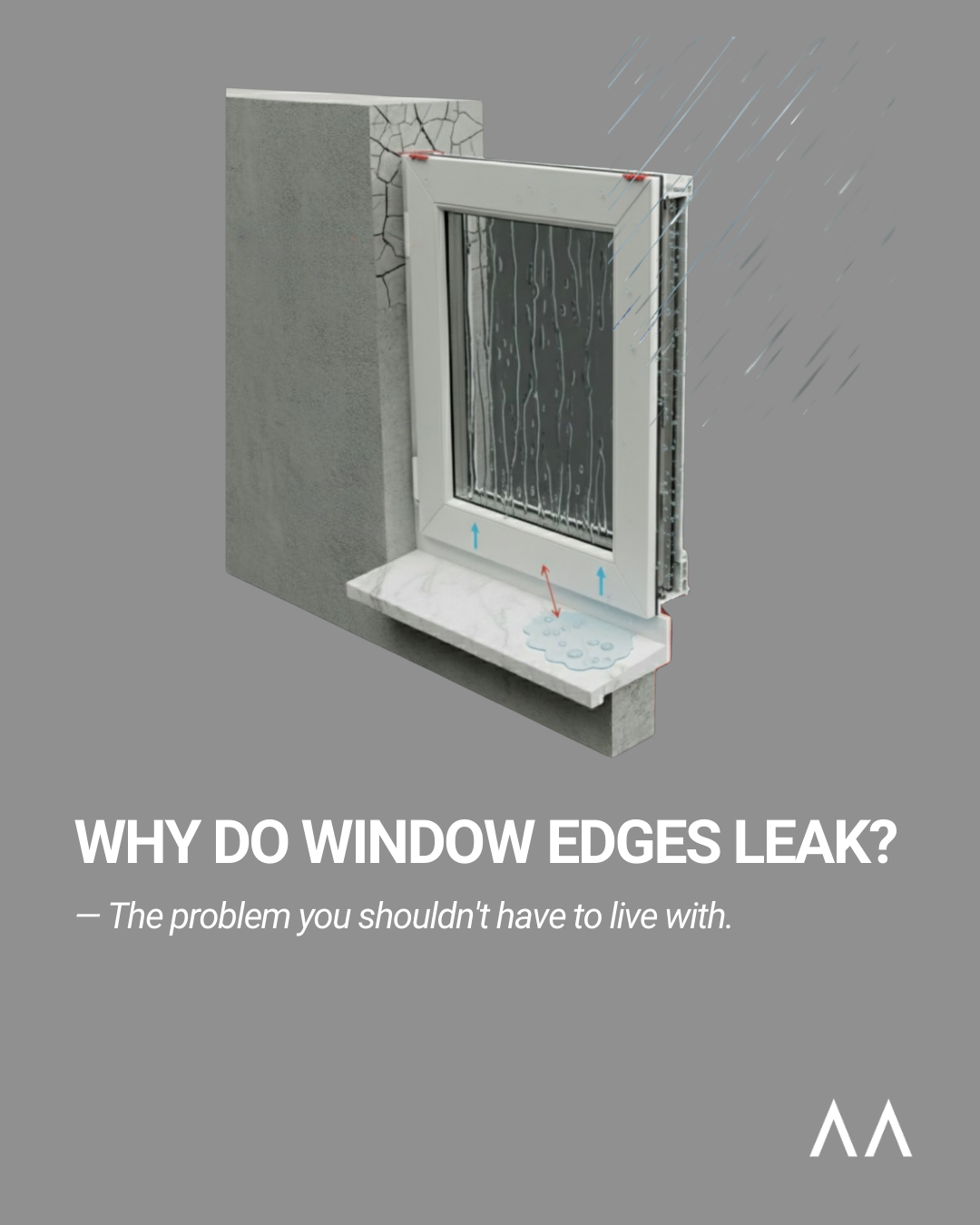
Why Do Window Edges Leak? The Next-Generation Aluminum Solution to Water Infiltration
When a storm hits and you find yourself patrolling your windows with towels instead of sitting comfortably at home, you’re facing more than a minor inconvenience. Water seeping through window edges is a direct threat to your home’s structural integrity and your family’s health.
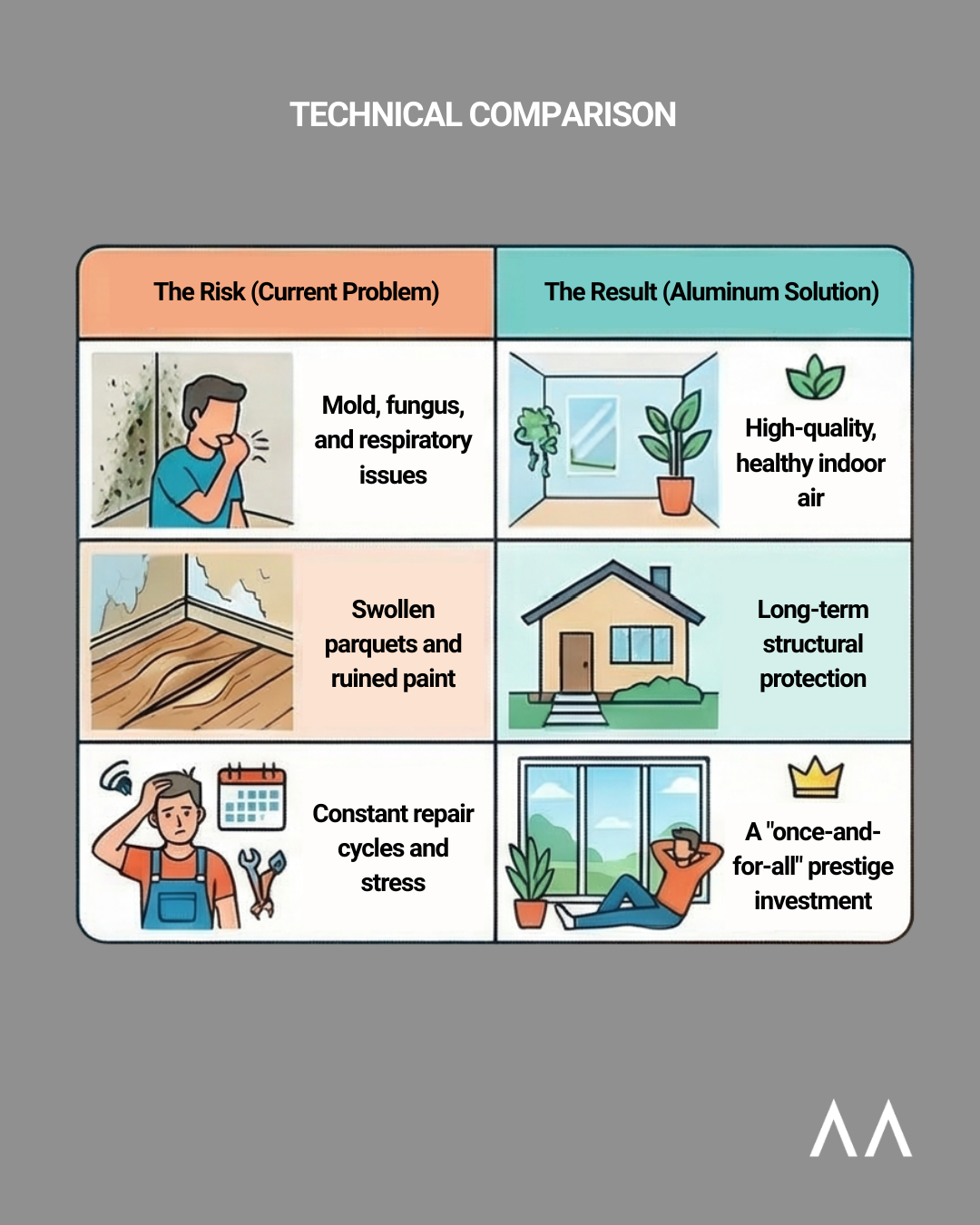
The visible signs — yellow wall stains, bubbling paint, warped floorboards — are only the surface. The real danger grows silently inside your walls: mold and fungal colonies thriving in trapped moisture, degrading your air quality and triggering respiratory issues. And the constant anxiety of wondering where the next leak will appear robs your home of the one thing it should always offer: peace.
VELTAA’s aluminum systems are engineered to break this cycle for good — freeing you from temporary fixes and preparing your building for whatever weather comes next.
Why Does It Happen? The Root Causes
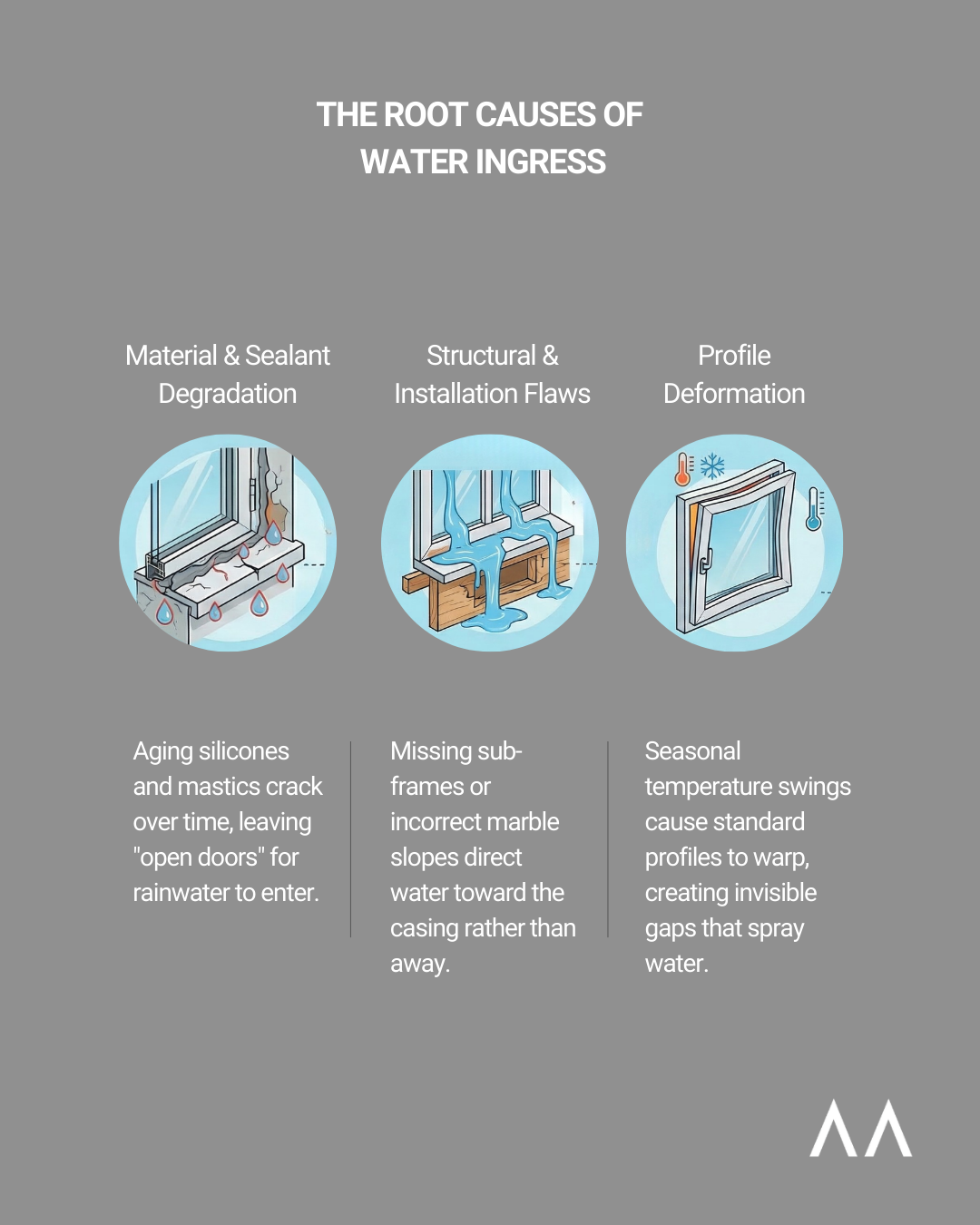
Most window leaks trace back to a handful of recurring engineering and installation failures:
- Deteriorated Sealing Materials: Silicone and mastic between the window frame and wall crack over time, leaving an open path for water infiltration.
- Incorrect Installation & Slope: Exterior sills installed with an inward slope direct rainwater straight into the frame instead of away from the building.
- Neglected Sub-Frame Application: Skipping the sub-frame during installation weakens the window’s grip on the wall. Over time, hairline gaps form between the wall and profile — especially dangerous in windy conditions.
- Blocked Drainage Channels: In standard PVC systems, small drainage holes clog with dust and debris. Water has nowhere to go and overflows directly onto your floors.
- Profile Deformation: Seasonal temperature extremes cause profiles to expand and contract, gradually losing their original form. Invisible gaps appear between frame and sash, allowing water to penetrate under pressure during heavy rain.
The Aluminum Advantage: Engineering That Ends the Cycle
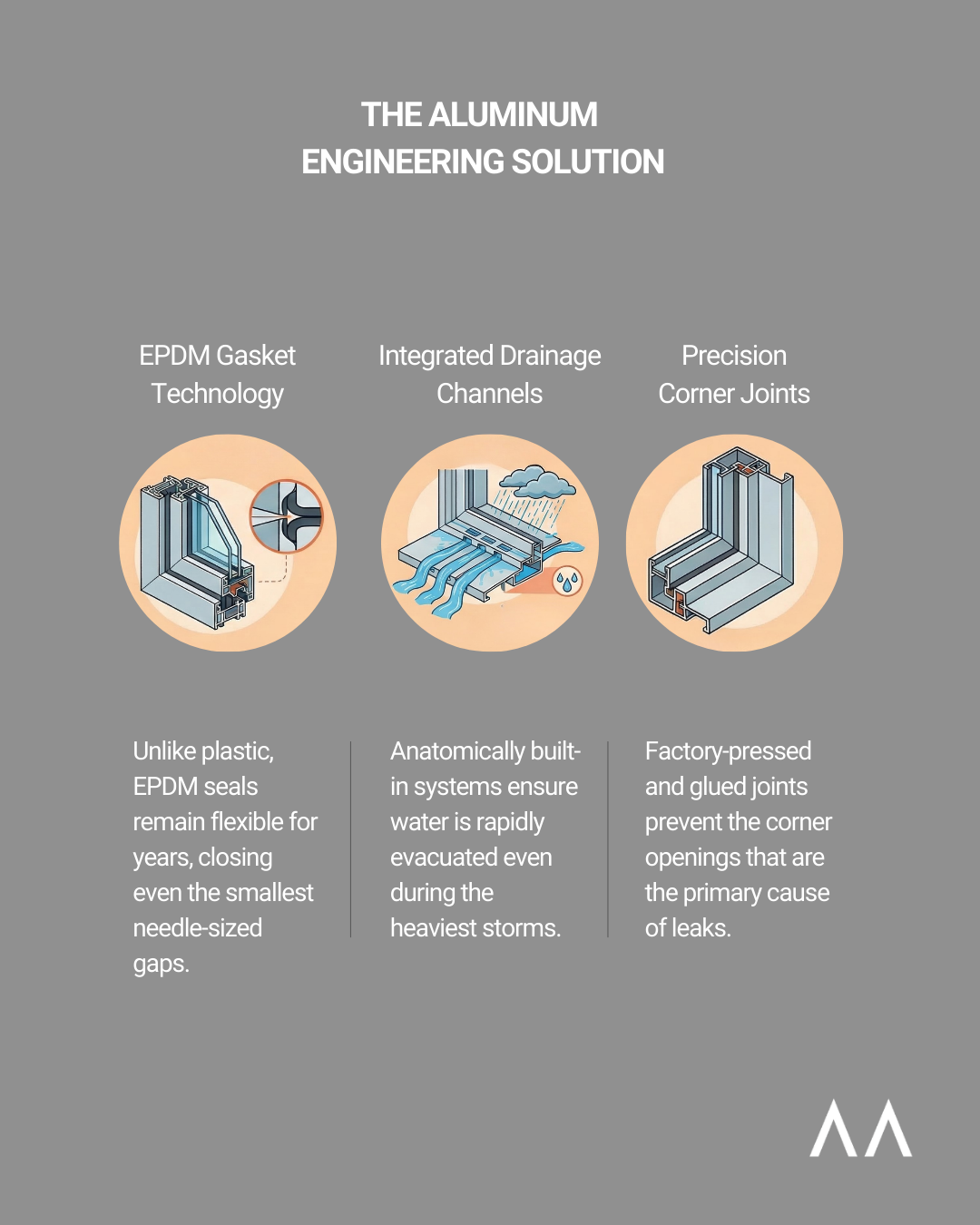
The path out of this recurring nightmare starts with the right material. Aluminum joinery systems are an engineering solution that eliminates these chronic problems at the root — combining aluminum’s inherent durability with:
- Integrated Drainage Channels In aluminum profiles, the drainage system is built directly into the profile’s anatomy. Even in the most severe storms, water is evacuated rapidly without pooling — by design, not by chance.
- EPDM Gasket Technology Unlike standard plastic seals that dry out and crack within a few years, EPDM gaskets used in aluminum systems retain their flexibility indefinitely. They keep even the smallest potential gap permanently sealed.
- Precision Corner Joints Aluminum profiles are factory-assembled using specialized pressing and bonding techniques, eliminating any possibility of corner separation. Corner gaps — one of the leading causes of water infiltration — simply don’t exist in aluminum systems.
Conclusion
Every drop of water that seeps through a window edge is a countdown against your building’s health and your quality of life. But this chronic problem doesn’t have to be an annual ordeal. With aluminum’s structural strength, precision sub-frame installation, and intelligent drainage technology, your windows transform from a source of anxiety into a long-term investment — protecting your home, your family, and your future.
Frequently Asked Questions
Does aluminum really stop window leaks permanently?
Yes. Aluminum's integrated drainage channels, EPDM gaskets, and precision corner joints work together to eliminate the root causes of water infiltration — not just mask the symptoms.
How is aluminum different from PVC in terms of water resistance?
PVC profiles rely on small drainage holes that clog easily and seals that deteriorate over time. Aluminum systems feature drainage built into the profile structure itself, with gaskets engineered to last the lifetime of the window.
What is a sub-frame and why does it matter?
A sub-frame is a structural backing installed before the window unit. It creates a stable, sealed connection between the wall and profile, eliminating the hairline gaps that are a primary entry point for water.
Can existing windows be upgraded to aluminum?
In most cases, yes. A professional assessment will determine whether a full replacement or a targeted upgrade is the right approach for your specific situation.
Beyond Aluminum — A global vision in every detail.