Guides
Knowledge Hub
VELTAA’s Knowledge Hub offers practical, engineering-based insights on aluminum joinery, facade systems, material performance, durability, insulation, installation techniques, and global standards. A curated resource for homeowners, architects, and contractors seeking reliable, long-lasting solutions in aluminum architecture.
Aluminum Windows in Historic Buildings: Combining Tradition with Modern Efficiency
This article explores how aluminum slimline window systems can be successfully integrated into historic buildings and boutique hotels, covering regulatory requirements, technical advantages, and the long-term investment value of choosing the right system.
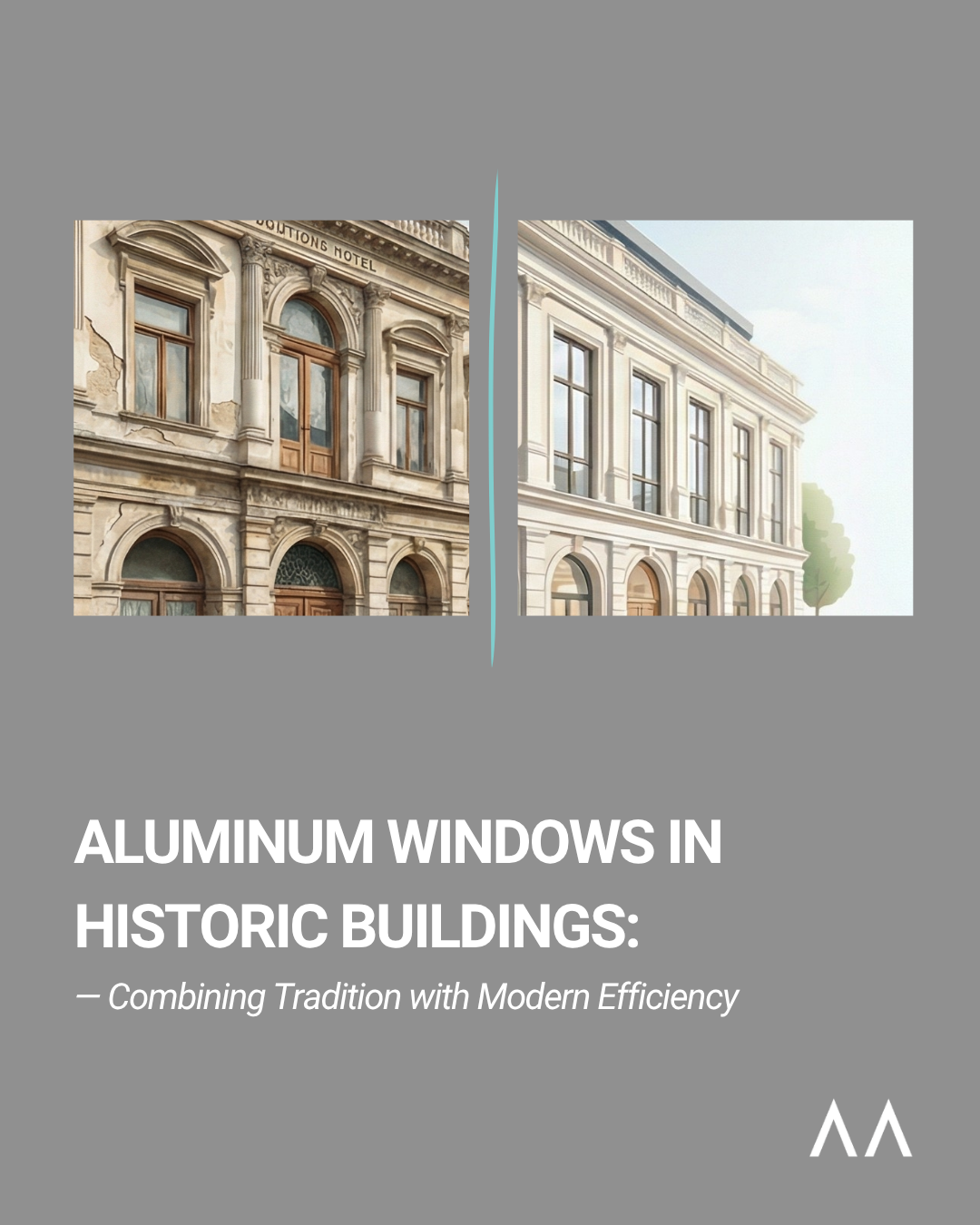
Historic buildings and boutique hotels are more than structures — they are part of a brand identity, a guest experience, and a legacy of prestige. Yet bringing these buildings up to modern comfort standards is, more often than not, a serious engineering challenge. Window systems in particular tend to be the weak point: underperforming, poorly insulated, and far behind contemporary expectations. The critical question is: can you replace them without losing the soul of the building?
The Most Critical Point in Historic Building Renovation
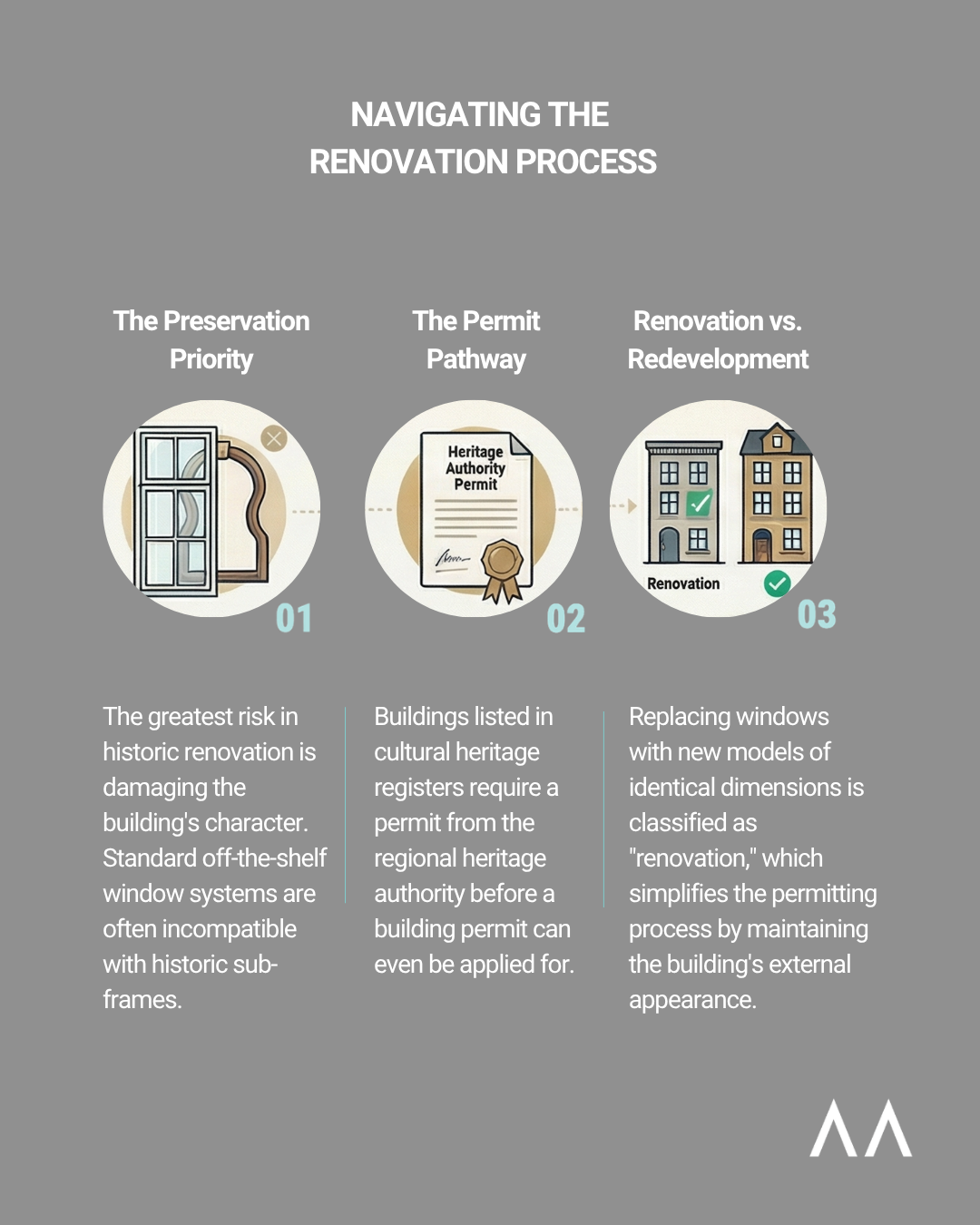
In boutique hotel and historic building projects, the greatest risk is that any intervention damages the building’s character. Existing sub-frames often must be preserved — which makes applying standard systems nearly impossible.
The wrong product choice leads to aesthetic compromise, installation difficulties, and long-term dissatisfaction. Renovation projects must therefore be solved not with off-the-shelf products, but with aluminum systems developed specifically for the project.
Building Renovation Process: Don't Act Before Obtaining Permits
Renovation work involving aluminum windows must be carried out in compliance with applicable standards and regulations.
For buildings or areas listed in the cultural heritage register, construction work — including renovation and redevelopment — requires a permit from the regional cultural heritage authority. Only after obtaining this permit can you proceed with a building permit application.
For buildings included in the municipal cultural heritage inventory but not listed in the register, the required permit for construction or demolition is issued by the architecture and construction authority in consultation with the provincial cultural heritage officer.
An important distinction: replacing windows with new models of identical dimensions is classified as renovation, not redevelopment. In such cases, neither the technical specifications nor the external appearance of the building changes — which significantly simplifies the permitting process.
The VELTAA Solution: A System That Adapts to the Building
At VELTAA, our approach is straightforward: we assess every building in its own context and develop the solution accordingly. The slimline systems we use for renovation projects preserve the historic fabric while elevating performance above today’s standards.
Key advantages that add value to your project:
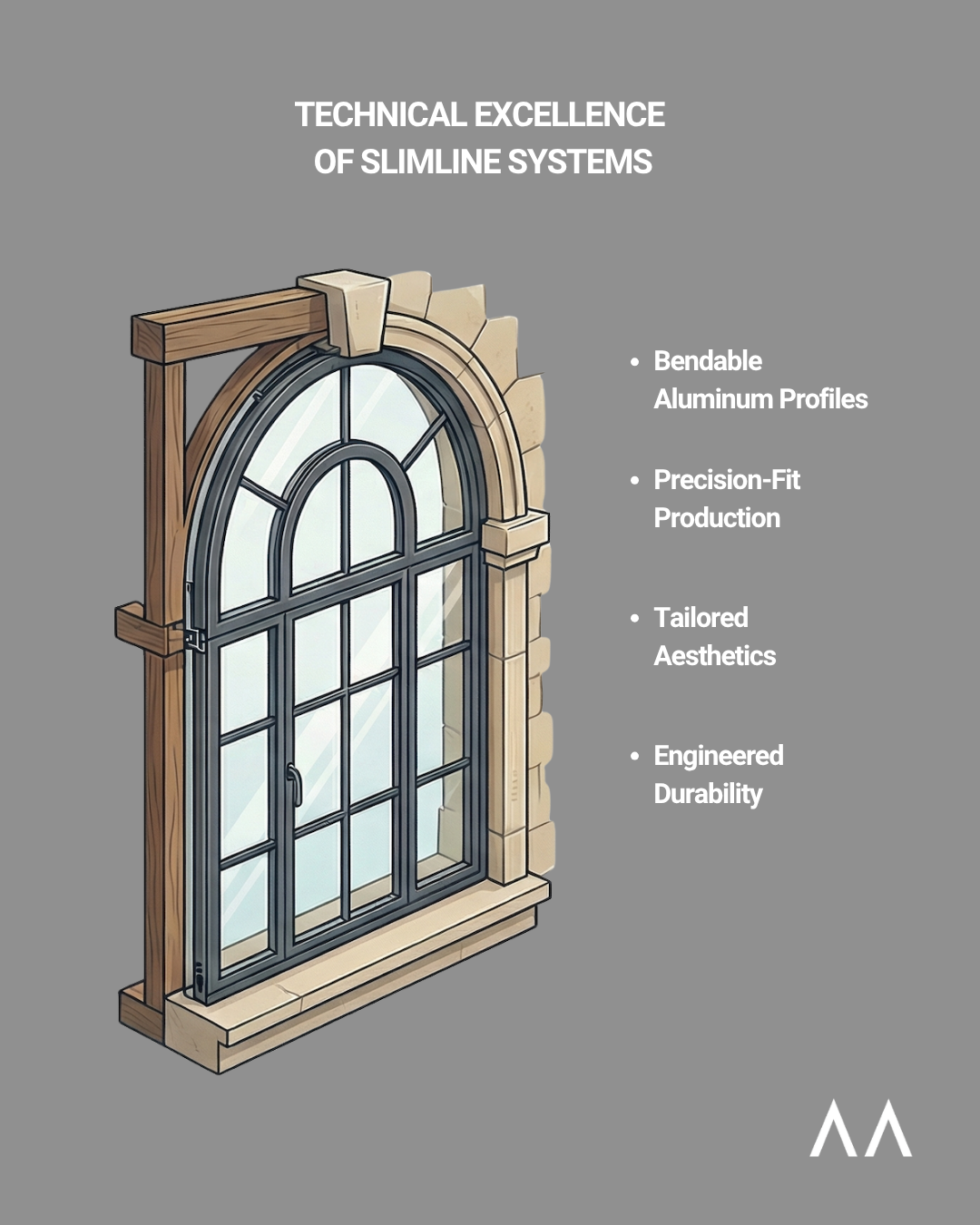
Precision-Fit Production to Existing Sub-Frames Eliminates the need for demolition and additional structural intervention.
Slimline Profile Design Does not compromise architectural aesthetics — instead delivers a more refined appearance.
High Thermal, Water, and Air Insulation Significantly improves energy efficiency and user comfort.
Project-Specific Color and Surface Options (Anodised / Powder Coated) Ensures the new system looks like a natural part of the building, not an afterthought.
Bendable Aluminum Profiles Aluminum profiles can be bent to replicate the appearance of original historic windows, maintaining visual continuity across the facade.
Not Just a Detail — A Strategic Investment
Selecting window systems in a renovation project is often perceived as a purely technical requirement or architectural necessity. In reality, this decision goes far beyond renewing the building’s skin — it is a strategic investment directly impacting the business’s future and profitability.
The right window system rewrites a building’s story across three critical dimensions:
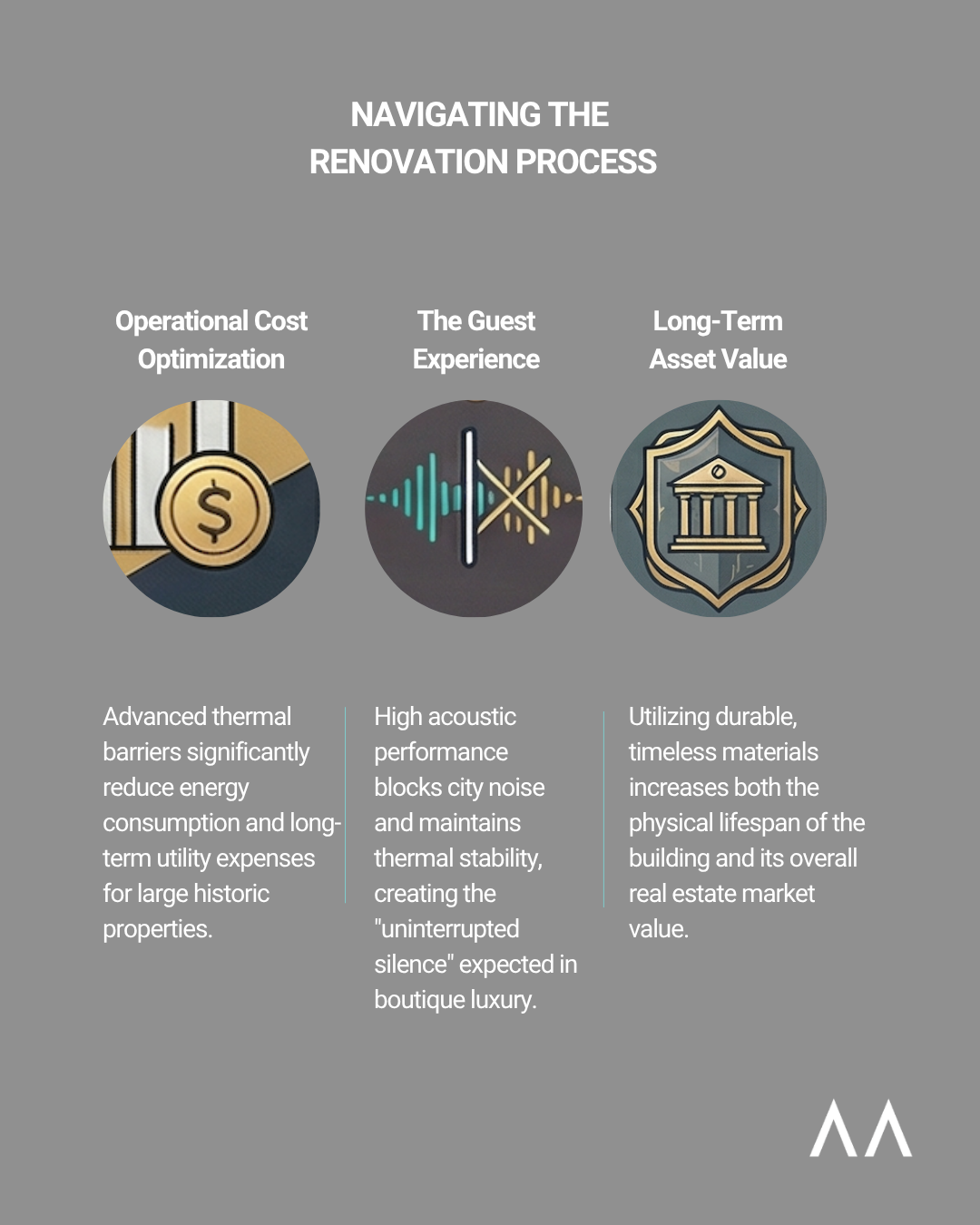
- Operational Cost Optimisation: Advanced thermal barriers significantly reduce energy consumption, minimising operational expenses over the long term.
- Exceptional Guest Comfort: High acoustic performance keeps city noise outside, while thermal stability creates ideal living environments within.
- Long-Term Asset Value: Durable materials and a timeless aesthetic directly increase both the physical lifespan of the building and its real estate value.
In carefully curated boutique hotel projects, it is precisely the details that distinguish one brand from another. The brand perception formed in the minds of guests is shaped by uninterrupted silence, perfect thermal balance, and the aesthetic coherence that brings the view inside without compromise.
In short: silence, warmth, and aesthetics are not merely architectural concepts — they are the keys to an unforgettable guest experience and lasting brand loyalty.
Frequently Asked Questions
Are slimline systems durable?
Yes. Slimline systems are not just aesthetic products — they are engineered solutions. Despite their narrow profile, they are designed to provide high structural strength and are resistant to both wind loads and long-term use.
Can insulation be improved without replacing the existing window system?
Limited improvements are possible, but a full system replacement is required for a permanent, high-performance solution. Next-generation aluminum joinery systems deliver a significant difference in thermal, water, and air insulation through advanced sealing technologies.
Can a color and appearance matching the historic building be achieved?
Yes. With project-specific anodised coating and powder paint options, colors can be produced to match existing facades, stonework, or timber details. The goal is for the new system to look like a natural part of the building — not something added later.
Beyond Aluminum — A global vision in every detail.