Guides
Knowledge Hub
VELTAA’s Knowledge Hub offers practical, engineering-based insights on aluminum joinery, facade systems, material performance, durability, insulation, installation techniques, and global standards. A curated resource for homeowners, architects, and contractors seeking reliable, long-lasting solutions in aluminum architecture.
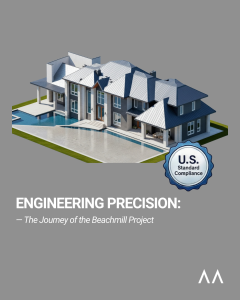
Where Engineering Meets Aesthetics in Virginia: THE BEACHMILL PROJECT
At VELTAA, we continue to expand our global solution partnerships. The Beachmill Project, realized in the state of Virginia, USA, stands as a strong example of how large-scale facade designs can seamlessly align with high-level engineering performance.
This project goes beyond visual appeal—addressing wind loads, wide openings, and demanding climate conditions through a fully engineered aluminum system designed for long-term reliability.
From Concept to Site: A Controlled and Precise Manufacturing Process
At VELTAA, project success is not defined solely by the final product, but by the technical discipline applied at every stage leading up to it. We work exclusively with manufacturing partners who operate under first-class quality standards—where precision is non-negotiable and error is not an option.
For the Beachmill Project, every step from order confirmation to production, packaging, and delivery was managed with international-level precision and full process traceability.
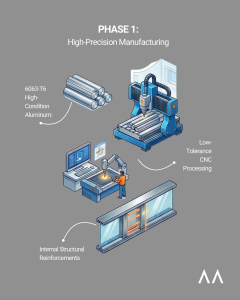
1. High-Precision Profile Processing & Structural Strength
The manufacturing process begins with the selection of high-condition 6063-T6 aluminum profiles, engineered to withstand Virginia’s strong winds and environmental conditions.
CNC Precision
All profile cuts and hardware channels are processed on computer-controlled CNC machines with low tolerances. This precision is critical for large sliding systems, ensuring sash alignment, smooth operation, and long-term performance without imbalance or deflection.
Structural Reinforcements
Profiles carrying large glass panels are internally reinforced with steel or aluminum stiffeners, selected according to project-specific wind load and structural calculations. This approach eliminates long-term risks such as sagging, deformation, and structural fatigue.
2. Insulation Technology & Detail Engineering
In Virginia’s variable climate, thermal performance is one of the most critical aspects of system design.
Connection Details
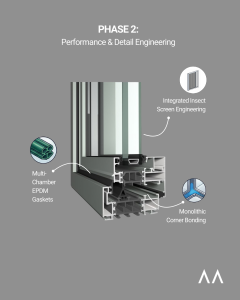
Corner pressing operations are executed strictly according to technical catalog specifications. Corner cleats are bonded to the profiles using a two-component adhesive system. This method not only joins the components but cures into a monolithic structure within the corner—maximizing airtightness, water tightness, and thermal insulation performance.
Correct installation of hardware and full compliance with operating principles significantly reduce system wear and performance loss over time.
EPDM Gasket System
Multi-chamber EPDM gaskets applied during manufacturing minimize air and water infiltration while supporting long-term comfort and durability.
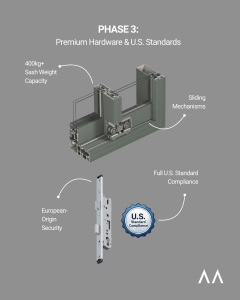
3. Premium Hardware & Production to U.S. Standards
The true performance of a window or sliding door system lies in its hardware.
Sliding Mechanisms
The sliding systems used in this project are equipped with stainless steel tracks and specialized roller mechanisms capable of handling sash weights of 400 kg and above, ensuring silent and effortless operation.
Multi-Point Locking Systems
Each sash is fitted with European-origin multi-point locking mechanisms, factory-tested prior to shipment. This ensures both security and long-term operational reliability.
Material Discipline & Precision Cutting
Technical catalog dimensions are not guidelines—they are mandatory parameters. Millimetric precision is fundamental to maintaining overall system integrity.
Why U.S. Standards?
Manufacturing in accordance with U.S. standards provides three key advantages:
- Interchangeability: Components remain compatible with globally available standard parts.
- Safety & Durability: Systems are produced within tested and approved limits, minimizing long-term risk.
- Global Credibility: Compliance with international standards enhances project and brand value.
4. Integrated Insect Screen Engineering
VELTAA insect screen systems are not designed as add-ons—they are engineered as an integral part of the joinery system. Accurate sizing and technical detailing ensure seamless operation with the primary aluminum profiles.
During manufacturing, dedicated channels are prepared to allow pleated screen panels to move smoothly, preserving both functionality and visual continuity.
Engineering Precision in Packaging
Packaging is as critical as production itself.
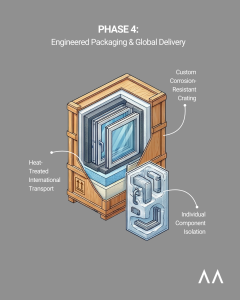
Custom Crating
Each system is packed using corrosion-resistant, impact-absorbing custom wooden crates designed specifically for overseas shipping.
Sensitive Component Protection
- Corner joints are reinforced with high-density protective elements.
- Handles, hinges, and locking mechanisms are isolated to prevent friction or pressure damage.
- Each panel and frame is individually packed to prevent surface contact and scratching.
Heat-Treated Wooden Crates
All wooden transport systems are heat-treated in compliance with international shipping standards—enhancing structural strength and ensuring cross-continental transport safety.
Conclusion: From Factory to Site — Delivered Without Compromise
Thanks to this disciplined engineering, manufacturing, and packaging approach, all Beachmill Project systems were delivered to the Virginia construction site without deformation or damage.
This project is a tangible demonstration of VELTAA’s commitment to delivering a seamless “factory-to-site” solution, where architectural intent is protected by engineering precision at every stage.
Frequently Asked Questions
How does the Beachmill Project address climate challenges?
The project utilizes high-condition 6063-T6 aluminum profiles and multi-chamber EPDM gaskets specifically engineered to withstand Virginia's high wind loads and salt-rich air. These materials prevent structural fatigue and ensure long-term thermal efficiency.
What ensures the smooth operation of large-scale sliding glass panels?
Precision is key. We use computer-controlled CNC machines for all profile cuts to ensure millimetric accuracy. Additionally, the systems are equipped with stainless steel tracks and rollers capable of handling sash weights exceeding 400 kg.
Are the aluminum systems compliant with U.S. building standards?
Yes. All manufacturing and hardware selections are executed in full compliance with U.S. standards. This ensures component interchangeability, enhanced safety, and long-term durability within the American regulatory framework.
How is the product protected during international shipping?
To prevent any deformation or surface damage during overseas transit, each system is packed in custom-engineered, heat-treated wooden crates. Sensitive components and corner joints are further protected with high-density materials to ensure factory-to-site integrity.
How Do We Manage Global Logistics & Customs?
At VELTAA, engineering excellence is only half of the story. Delivering high-performance aluminum systems from our factory to a construction site in Virginia requires a flawless logistics and customs strategy.
From international shipping standards to complex customs documentation, we ensure that every component of the Beachmill Project arrives on time and without compromise.
To learn more about how we simplify these complex global processes and ensure seamless delivery for our international partners, visit our detailed guide in the Knowledge Hub.
Beyond Aluminum — A global vision in every detail.